49+
Years Of Experience
Systems Sized to Match the Load
Furnace installation and replacement in Wilmington for properties requiring updated heating capacity, improved efficiency, or equipment that has reached end of service life
Many Wilmington-area homes were built with furnaces sized by outdated rules of thumb rather than calculated heat loss, resulting in oversized equipment that short-cycles or undersized units that run continuously during cold snaps. William G Day Co installs and replaces furnaces for residential and light commercial properties after performing load calculations that account for insulation levels, window area, infiltration rates, and duct system configuration. You call when your existing furnace requires frequent repairs, when fuel costs remain high despite routine maintenance, or when rooms farthest from the furnace never reach comfortable temperatures.
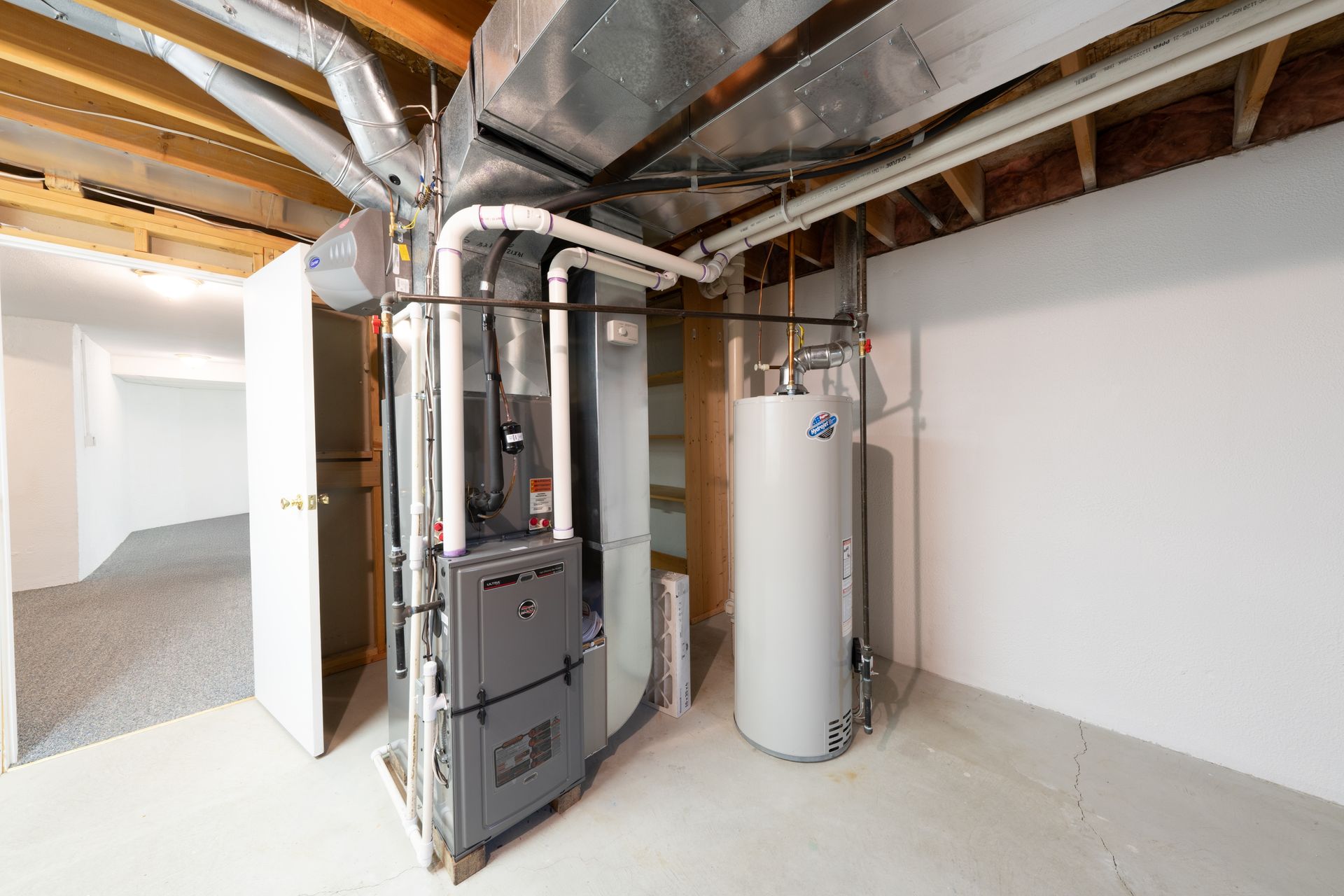
Installation begins with removing the old furnace, inspecting the existing ductwork for leaks or disconnected sections, and verifying that the flue or vent pipe meets current code for the new equipment's combustion category. The replacement furnace is positioned to align with supply and return plenums, gas piping is extended or reconfigured to reach the new valve location, and electrical connections are made according to the unit's voltage and amp requirements. The thermostat is replaced or reprogrammed to match the new system's staging and fan control logic.
Request an on-site assessment to determine the correct furnace size and efficiency rating for your property's heating requirements.
How Equipment Selection Affects
Long-Term Performance
Furnace sizing depends on heat loss calculations, not square footage alone. A Manual J load analysis accounts for wall and attic insulation, basement or crawlspace conditions, window U-values, and air leakage measured or estimated through blower door testing. Single-stage furnaces operate at full capacity whenever the thermostat calls for heat, while two-stage or modulating models adjust output to match the load, reducing temperature swings and extending runtime for better air filtration.
After installation, the furnace ignites smoothly without delayed starts or flame rollout, supplies even warmth to all rooms without hot or cold zones, and completes heating cycles that match the thermostat differential setting. The system operates quietly at startup, and airflow from registers feels consistent across the property. Fuel consumption drops when an older, atmospherically vented furnace is replaced with a sealed-combustion model rated above 90 AFUE.
Installation includes startup documentation, airflow verification using static pressure measurements, and combustion analysis to confirm the burner is operating at the manufacturer's specified efficiency range. Warranty registration is completed at the time of install, and the service record is filed for future reference.
Answers About Furnace Replacement Decisions
These questions address the installation process and what changes after a new furnace is in place.
- What determines the right furnace size for a home? Heat loss is calculated using insulation values, window area, air infiltration, and duct system design, then matched to a furnace with output capacity that meets the peak heating demand without excessive oversizing that causes short-cycling.
- How does a two-stage furnace differ from a single-stage model? A two-stage furnace operates at a lower firing rate during mild weather and switches to full capacity only when needed, which extends runtime, reduces temperature swings, and improves filtration compared to single-stage equipment that runs full output on every call.
- What ductwork modifications are made during furnace replacement? Plenums are adjusted to fit the new furnace dimensions, disconnected sections are resealed, and the return air path is verified to prevent negative pressure that could backdraft combustion gases in Wilmington-area homes with older duct systems.
- When should a furnace be replaced rather than repaired? Replacement is considered when the heat exchanger is cracked, when the furnace is more than 15 years old and repair costs exceed half the price of new equipment, or when the existing system cannot maintain comfort despite repeated service calls.
- What testing is performed after a new furnace is installed? The system is tested for ignition reliability, burner flame appearance, temperature rise across the heat exchanger, static pressure in the duct system, and proper operation of all safety controls including the limit switch and pressure switch.
William G Day Co also installs furnaces in Hockessin and Newark. Financing options are available for qualifying installations. Call (302) 427-3700 to schedule a furnace replacement consultation and review equipment options for your property.